Curriculum

Immediate invention followed by progressive technical depth.

Students begin with cause and effect, real materials, instructor-guided safety, team collaboration, documentation, troubleshooting, failure analysis, and capstone invention.

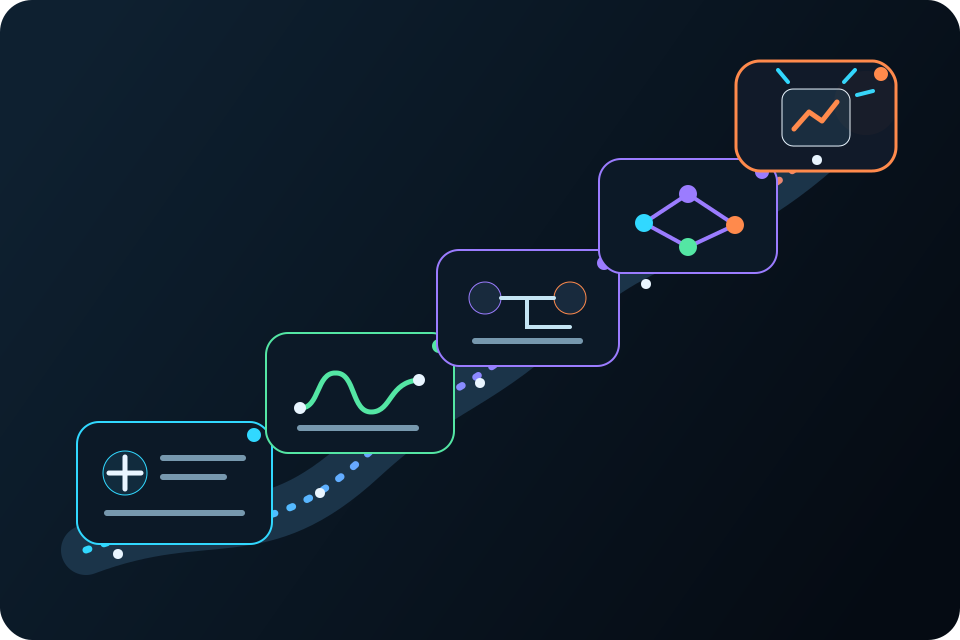
Nine-stage curriculum route from low-voltage wiring through connected systems to a student capstone
The pathway adds technical layers without losing the physical cause-and-effect that started it.

Learning model

A working system becomes the object students think with.

Every module returns to a shared engineering practice, so new technical ideas arrive inside a familiar way of working.

  1. 01Build

    Turn a real input into a physical response.

  2. 02Observe

    Read state and compare expectation with behavior.

  3. 03Document

    Record wiring, logic, decisions, and results.

  4. 04Troubleshoot

    Use evidence to isolate what is not working.

  5. 05Revise

    Change the system and test the next version.

The progression

Nine modules move from first circuit to original invention.

Suggested sequencing can be adapted by instructors. The pathway is not presented as a rigid grade-level or standards alignment.

  1. 01
    Foundations Electricity, wiring, inputs, and outputs

    Touch-controlled lighting

  2. 02
    Foundations Sensors and physical events

    Door and presence logger

  3. 03
    Automation Timers, state, and automation logic

    Temperature-controlled ventilation

  4. 04
    Connected systems Networking and distributed ESP32 systems

    Wireless classroom environmental monitor

  5. 05
    Identity and interaction RFID, identity, and access

    RFID tool cabinet

  6. 06
    Identity and interaction Cameras and machine perception

    QR-controlled interactive exhibit

  7. 07
    Identity and interaction Audio, voice, and human interaction

    Accessible voice-operated room controller

  8. 08
    Reliability Reliability, safety, and troubleshooting

    Leak and water-level monitor

  9. 09
    Capstone Student capstone invention

    Student-designed capstone

Module detail

What each stage adds.

Students physically build, wire, test, document, and revise throughout the pathway. Open a module to see the new system idea, sample project, and skills it introduces.

Instructor adaptable

Educators can change pacing, project context, team structure, and depth while preserving safe low-voltage practice and visible evidence.

Students learn
Safe low-voltage circuits.
Sample project
Touch-controlled lighting.
Skills developed
Wiring, polarity, measurement, and documentation.

Students learn
Connect sensors and observe state changes.
Sample project
Door and presence logger.
Skills developed
Input selection, calibration, and cause and effect.

Students learn
Build rules, schedules, and conditions.
Sample project
Temperature-controlled ventilation.
Skills developed
Logic, state, timing, and debugging.

Students learn
Link multiple stations to the hub.
Sample project
Wireless classroom environmental monitor.
Skills developed
Network concepts and distributed systems.

Students learn
Model credentials and permissions.
Sample project
RFID tool cabinet.
Skills developed
Identity, authorization, and audit thinking.

Students learn
Use visual markers and camera events.
Sample project
QR-controlled interactive exhibit.
Skills developed
Vision events, lighting, and reliability.

Students learn
Add sound, prompts, alerts, and voice.
Sample project
Accessible voice-operated room controller.
Skills developed
Interfaces, feedback, and accessibility.

Students learn
Test failure modes and recovery.
Sample project
Leak and water-level monitor.
Skills developed
Risk analysis, logs, backup, and repair.

Students learn
Design, build, document, and present.
Sample project
Student-designed capstone.
Skills developed
Project management, iteration, and portfolio evidence.

From guidance to ownership

The scaffolding changes as the system grows.

Beginning

Known parts, visible result

A guided build gives students immediate cause and effect while introducing safe wiring and documentation.

Developing

More variables, more decisions

Networks, identity, perception, and interaction require students to choose conditions and test reliability.

Capstone

Original need, owned evidence

Students define the problem, choose the system, document tradeoffs, test failure cases, and present the result.

This site does not claim completed standards alignment. Instructors should evaluate sequence, depth, and classroom use within their own program context.

Start a conversation

Connect the curriculum to the lab you want to build.

Share your program setting, student group, and technical goals so the starting configuration can match the learning pathway.